01
Use one purchasing brief for every option
Compare proposed fabrics against the same garment style, wearer needs, color direction and intended care process. State whether the uniform will be washed at home or through another specified process, and identify any required performance evidence. Separate essential requirements from preferences such as hand feel. Raise Apparel offers multiple material directions for garment development; review available options against your order instead of assuming every composition suits the same program.
02
Give each swatch an identifiable reference
Label each physical swatch so comments and quotations refer to the same material. Two swatches with identical composition percentages may differ in construction, weight, finish and behavior. Record confirmed values and mark missing information as pending. Keep the material reference separate from the color reference, since selecting a fabric does not approve every shade.
- Material code, supplier reference and swatch date
- Stated composition, weave or knit construction and GSM
- Stretch direction, recovery requirements and finish
- Color reference, intended care and supporting documents
03
Compare swatches under consistent conditions
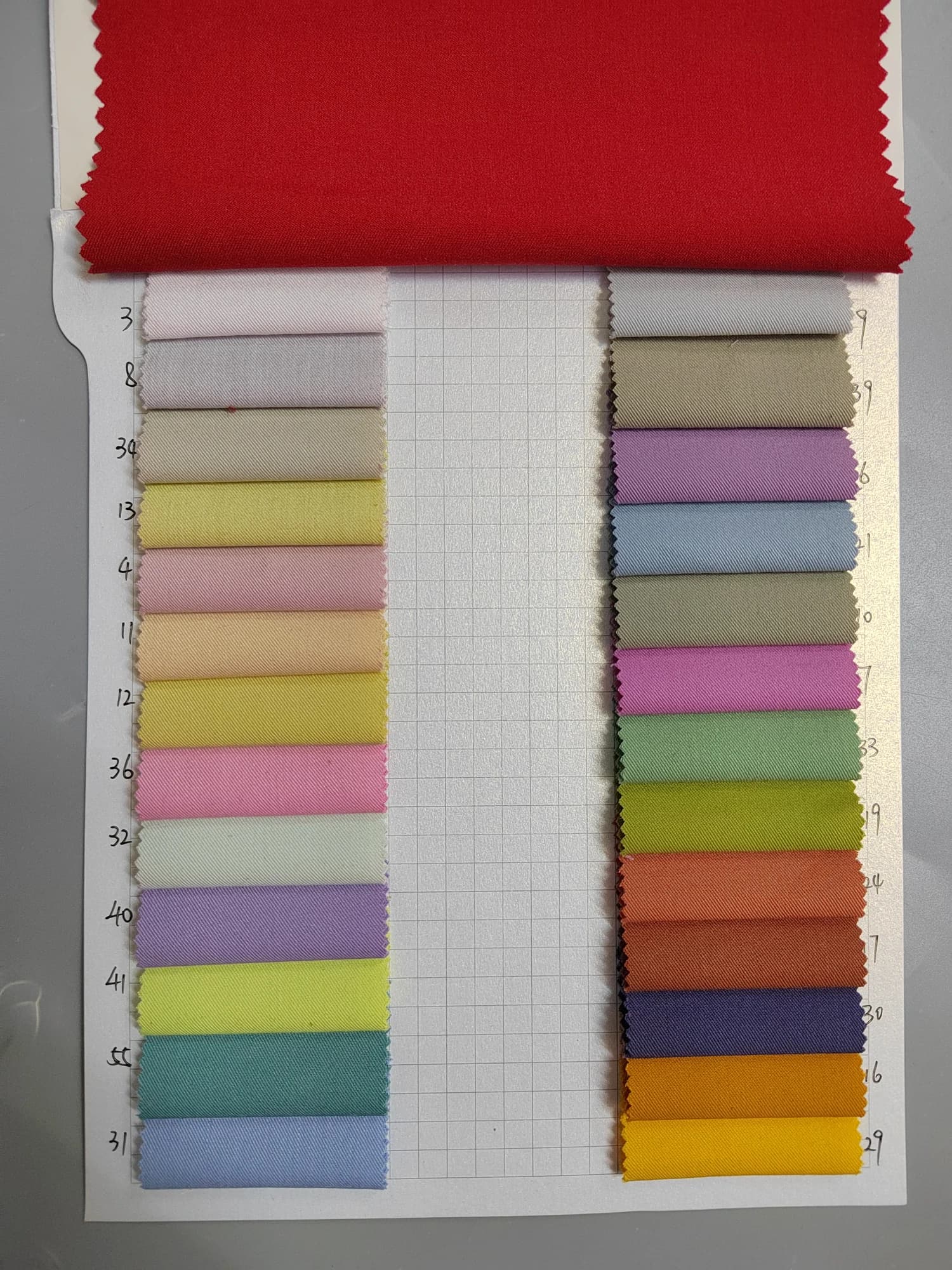
Review proposed options together for hand feel, drape, visible shade and opacity, using a consistent viewing setup. Include the intended light colors rather than drawing conclusions from a dark swatch. Record observations beside each material reference. Screen photographs and color cards help shortlist options, but lighting and displays can change their appearance; use the agreed physical shade reference for approval. A visual comparison does not verify fiber composition or a specialist performance claim.
04
Check the material in the intended garment
A swatch cannot show how the complete scrub will fit or move. Review a garment sample with the proposed silhouette, seams, pockets, waistband and decoration. Check opacity and appearance at stretched areas and assess movement during the activities relevant to the brief. Where cuffs, pocketing or trims use different materials, review them together for shade, feel and care compatibility. Identify any substitute sample material before recording approval.
05
Agree the wash evaluation before testing
Specify the sample identity, wash and drying method, review sequence and acceptance criteria before results are assessed. Record the starting measurements and use the same measurement method afterward. Depending on the program, review dimensional change, shade, surface appearance, seams and decoration. Agree who performs the evaluation and what records or testing documents are required. Do not treat an informal home-wash observation as proof of industrial-laundry suitability.
06
Match evidence to the exact requirement
If a test report is needed, check which material or sample it covers, the test method and conditions, the reported result and its relevance to your intended use. Fiber percentages alone do not establish four-way stretch, moisture management or antimicrobial performance. Distinguish an observation, a supplier statement and a relevant test result in the comparison sheet. Any required certification or specialist claim must be supported for the selected product rather than assumed from its fabric name.
07
Approve the option and control later changes
Keep the selected swatch, shade, garment sample and agreed specification together with the approval name and date. Confirm how the choice affects material availability, color minimums, sampling and the quotation. For repeat orders, refer to the approved material and review any proposed substitution or shade difference before acceptance. If a change affects fit, care or decoration, agree which sample checks need repeating; matching composition alone is not enough to approve a replacement.