01
Choose this fabric option across our product range
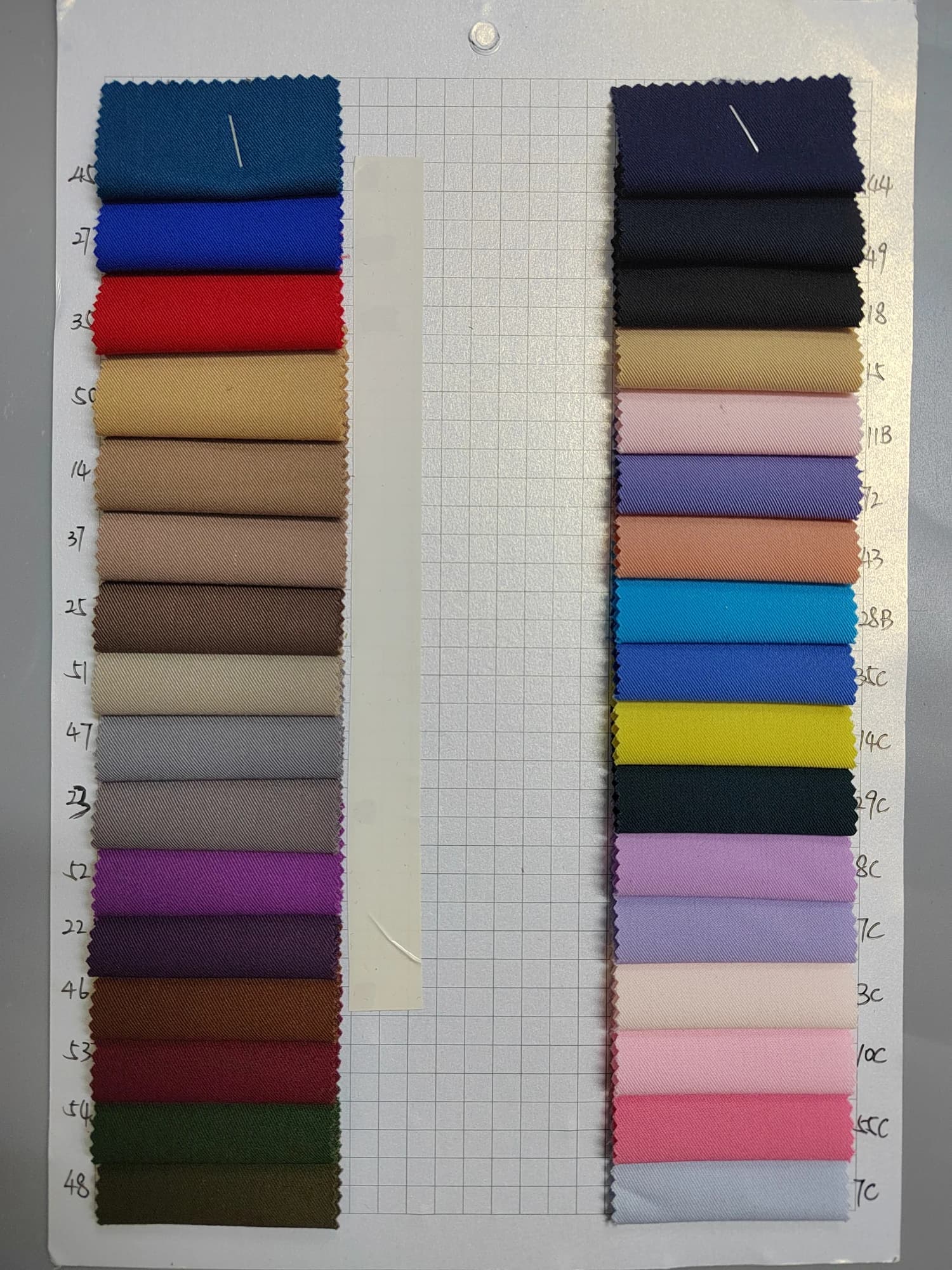
Raise Apparel offers 72% polyester / 21% rayon / 7% spandex TR stretch twill as a custom fabric option for every catalogue style and product category, including scrub sets, separate tops and pants, jogger scrubs and lab coats. Choose the garment first, then specify this blend in your sample brief. Catalogue photographs and other proposed fabric directions do not determine the material for your custom order. Confirm the selected material reference, weight and shade with the approved sample; other compositions and finishes are also available for discussion.
02
Composition alone does not establish performance
The percentages describe the stated fiber composition, but do not tell you the fabric weight, construction, stretch direction, recovery or wash behavior. TR twill describes a material direction and weave, while four-way stretch describes movement in two directions. Do not assume that 7% spandex automatically makes a fabric four-way stretch, or proves moisture management, antimicrobial performance or industrial-laundry suitability. Ask for evidence relevant to the selected material and intended use when a performance claim matters.
03
Record a complete material brief
Request an identifiable swatch and agree the details below before comparing quotations. Two materials with the same composition can be different purchasing choices. If a value is still undecided, state the target or ask for options rather than filling the specification with an assumed number.
- Fabric reference, composition and weave or knit construction
- Weight in GSM and any agreed tolerance
- Stretch direction and recovery requirements
- Color reference, opacity and desired hand feel
- Finish, care instructions and required test evidence
04
Review the fabric in the intended garment and color
A swatch is useful, but the fit and construction of the garment also affect how it feels in use. For separate tops and pants, agree a shared fabric and shade reference if they must match. For joggers, specify any separate cuff material and review it with the garment body. For lab coats, check opacity and movement over the clothing worn underneath. Review pockets, waistband, seams and movement on the finished sample. Use physical swatches for shade approval: a screen image or a color-card photograph is a reference for discussion, not the final color standard.
05
Agree a wash and sample review before bulk approval
Describe how the buyer expects the uniform to be washed and used. Agree the relevant review or testing scope before placing the bulk order, including dimensional changes, appearance, shade, seam behavior and any specified performance requirement. Record the sample identity, care method and acceptance criteria. A composition statement or a production video is not a substitute for a fabric-specific test report, and this guide does not claim a certification for the material.
06
Compare other options against the same purchasing brief
If 72/21/7 is not the right direction, share your target hand feel, weight, stretch, care requirements and commercial plan. Compare proposed alternatives using the same sample-review checklist. Ask how a different material or custom color affects minimum quantity, sampling and bulk availability. Avoid treating all stretch fabrics as interchangeable, especially when the same style is expected to be reordered.
07
Keep the approved swatch linked to the order
Record the material code, approved shade, garment sample and current specification together. For later orders, confirm whether the same material is available and agree how any substitution or shade difference will be handled. To start a discussion, send the product type, preferred blend, estimated quantity by color and any required testing or care conditions. Our team can then review suitable fabric and sampling options for that specific scrub program.